World Economic Forum 2026 Key Outcomes
World Economic Forum 2026 Key Outcomes
The 56th annual World Economic Forum (WEF) meeting held in Davos, Switzerland brought together policymakers, business leaders, and global institution heads to address pressing economic, geopolitical, and technological challenges shaping 2026.
This year’s forum was held against a backdrop of rising geopolitical tensions, rapid technological change, and persistent global economic fragility. Discussions focused on global growth prospects, geopolitical instability, climate change, and the future of jobs in an increasingly automated world.
Economic Resilience and Global Cooperation
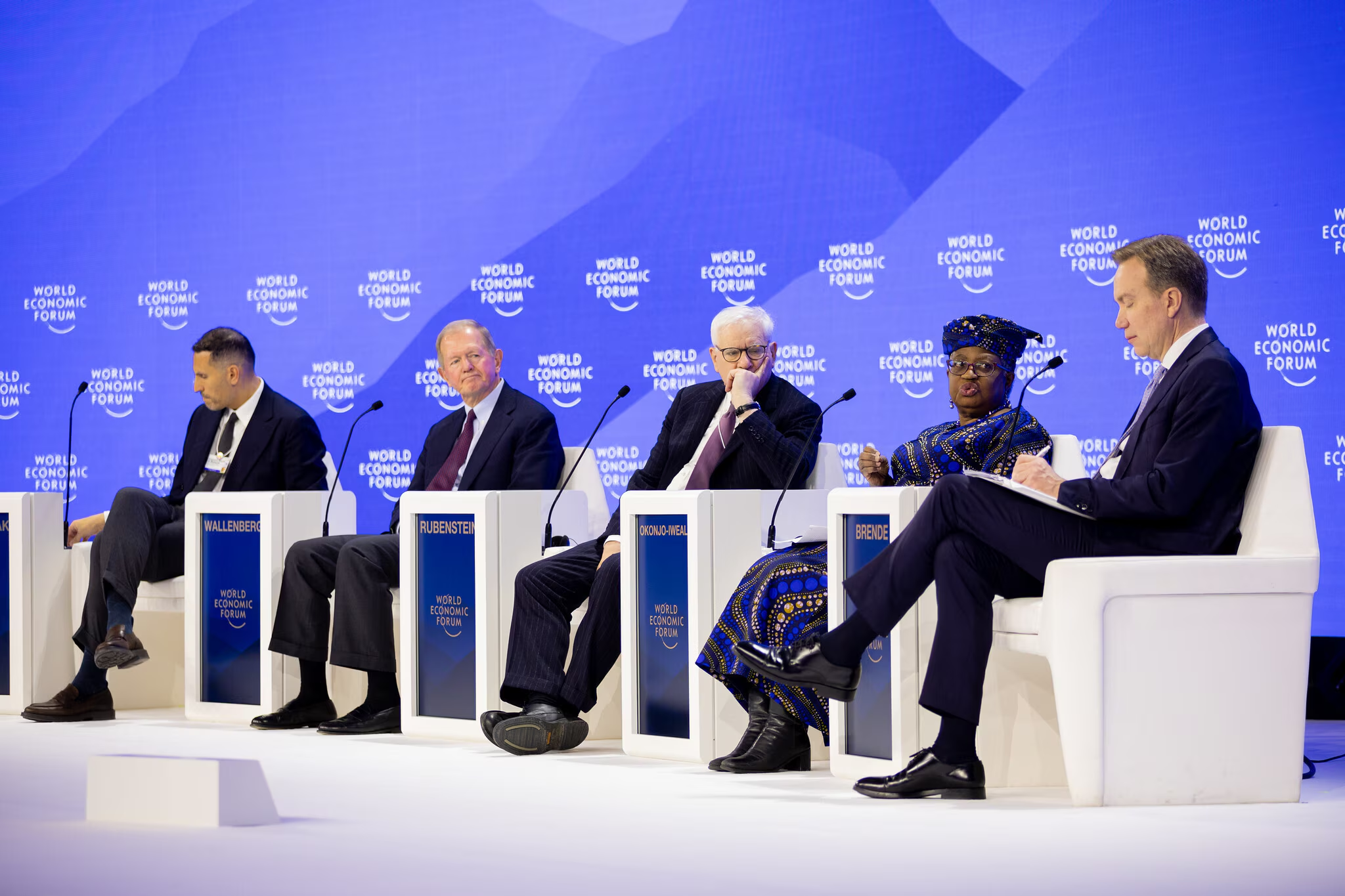
One of the central themes of the Davos 2026 meeting was the global economy’s resilience following a turbulent 2025. Leaders including heads of the International Monetary Fund (IMF), the World Bank, and the World Trade Organization (WTO) emphasized that while modest economic growth persists, risks from high national debt, uneven recovery trends, and geopolitical divisions continue to challenge global cooperation.
IMF Managing Director Kristalina Georgieva warned that advancements in artificial intelligence (AI) were rapidly transforming labor markets, with significant implications for employment and workforce skills. She described an approaching “AI tsunami” poised to shift millions of jobs globally unless governments and businesses prepare effectively.
Geopolitical Tensions and Power Dynamics
The forum also highlighted the evolving nature of global security and power balance. German Chancellor Friedrich Merz expressed concerns about a shifting world order, citing tensions between major powers and increased competition for political influence and economic advantage.
Economic policy disputes—including tariffs and digital trade restrictions—have increasingly become tools of geopolitical influence. A World Economic Forum survey found “geoeconomic confrontation” ranked as a top global risk in 2026, replacing traditional armed conflict for the first time in recent years.
Climate and Technological Imperatives
Climate policy and the role of energy transition also dominated discussions. Although environmental concerns dropped slightly in short-term risk rankings, leaders acknowledged the long-term importance of sustainable development and decarbonization strategies.
Technology leaders participating in the forum echoed the need for clear frameworks to regulate AI development, safeguard data, and harness digital innovation for inclusive growth. These cross-cutting issues remain central to geopolitical and economic strategies worldwide.
Outlook for the World Economy
In closing, global decision-makers reiterated the need for multilateral cooperation—particularly in trade, climate finance, technology governance, and health systems—despite rising geopolitical fractures. The Davos 2026 summit underscored a common sentiment: while economic structures have shown resilience, a fragile and interconnected world requires unprecedented collaboration to meet future challenges.
Share this content: